
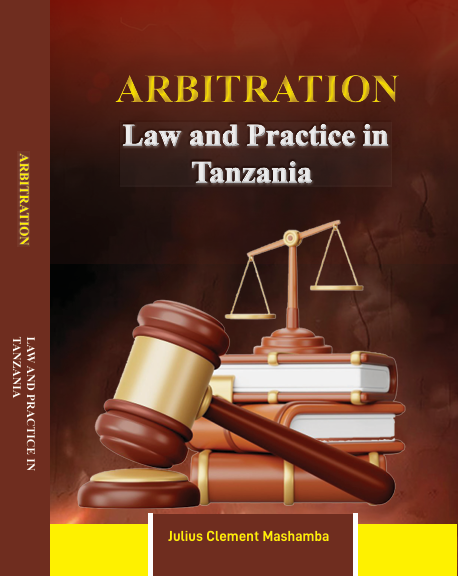
Today, arbitration is the most preferred method of alternative or ‘appropriate’ dispute resolution (ADR) both in Tanzania and globally. It has gained international recognition and is widely used to complement the conventional mode of resolving civil disputes through courts of law.
To date, several developments have taken place in the law and practice of arbitration both in Tanzania and internationally. Between 2016 and 2025, Tanzania has participated in both international and domestic arbitration cases as a result of the proliferation of, inter alia, foreign direct investment (FDI) as well as commercial and business activities in the country involving both transnational and domestic participants. With such increase in FDI as well as commercial and business activities in the country, disputes have also arisen requiring them to be resolved through arbitration since most of the commercial contracts and international investment agreements (IIAs) have embraced arbitration clauses and consent to arbitration, respectively.
Moreover, following the introduction of court-annexed alternative dispute resolution (ADR) in Tanzania’s civil justice in the form of mediation and arbitration in 1994 (vide G.N. No. 422 of 1994); in 2019 the Chief Justice, once again, entrenched ADR by making further amendments to the First Schedule to the Civil Procedure Code (CPC) – vide G.N. No. 381 of 2019. In particular, the 2019 amendments to the CPC introduced amendments that arbitration, (re)conciliation, mediation, or negotiation – before proceeding to full trial.
Yet again, in 2020, the Arbitration Act (Cap. 15 R.E. 2020) was enacted, repealing and replacing the 1931
Arbitration Act, in effect. The 2020 arbitration legislation has not only domesticated international arbitration
norms and standards, but it has also introduced the requirement for accreditation of ADR practitioners in
Tanzania (i.e., arbitrators, mediators, negotiators, and reconciliators), failure to undertake which is a criminal
offence.
This law has also established the Tanzania Arbitration Centre (TAC), which is clothed with the mandate of, inter alia, administering both domestic and international arbitrations seated in Tanzania.
With these developments, both the High Court and Court of Appeal of Tanzania have started to render robust
decisions emphasising on the need for embracing arbitration as the most preferred mode of dispute resolution of civil disputes in the country. Therefore, these developments have necessitated the publication of the second accommodate these current developments in the law and practice relating to arbitration in Tanzania and internationally.
In recognition of the importance of arbitration and ADR in civil litigation in Tanzania, ADR has been made a
compulsory subject in higher learning/training institutions for lawyers, particularly so at the Law School of
Tanzania (LST). Cognizant of this development, therefore, this book provides theories, principles, practice and materials relating to arbitration law and practice in Tanzania with comparison to international arbitration law and practice.
The book is thus essential to practicing lawyers, arbitration practitioners (both arbitrators and arbitration counsel), jurists, academics as well as law students. It also contains additional information on
evolving standards in international and domestic arbitration, which are very useful to legal practitioners,
arbitrators, arbitration counsel, State Attorneys, jurists and law students in Tanzania.

Reviews
There are no reviews yet.